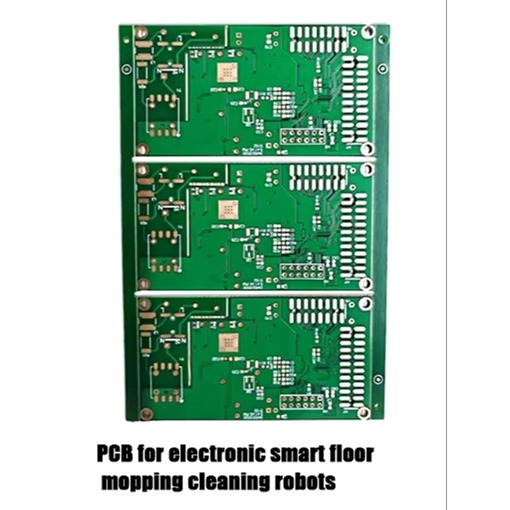

Printed Circuit Boards for Robots
Modern automation relies heavily on robots and their electronic components. A crucial element in robotics is the printed circuit board (PCB), which facilitates electronic control and operation. Given the diverse applications of robotics across various industries, finding PCB solutions that cater to the specific needs of automated devices is increasingly important. The circuit board serves as the control system and is one of the five essential components of a robot, vital for its proper functioning. The other key parts include sensors, actuators and feedback mechanisms, the body, and the power supply. Due to its critical role in controlling the robot, designers must prioritize the quality and structure of the PCB.
Design Considerations for PCBs in Robotics
The PCB begins with a schematic, a crucial phase for outlining the components and their arrangement on the circuit board. Be precise during design to prevent issues during evaluation or manufacturing. Design considerations include trace width, drill size, and package design.
Trace Width
The trace width refers to the physical dimension of the conductive path, or trace, on a printed circuit board (PCB). This width is crucial as it determines the current-carrying capacity of the trace. A wider trace can handle more current without overheating, while a narrower trace is suitable for lower current applications. The width of the trace also affects the impedance and signal integrity, especially in high-frequency circuits. Engineers must carefully calculate trace widths based on factors such as the desired current, PCB material properties, temperature rise tolerance, and signal frequency to ensure optimal performance and reliability of the electronic device.
Drill Size
PCB drill size refers to the diameter of the holes drilled into a printed circuit board (PCB) to accommodate through-hole components. These sizes are crucial as they determine the fit of the component leads and the overall functionality of the PCB. Common drill sizes range from 0.1 mm to 3.2 mm, with precision required to ensure proper electrical connections and mechanical stability. Smaller drill sizes are typically used for fine-pitch components, while larger sizes are needed for connectors and larger components. The accuracy of these drill sizes can affect the soldering process and the reliability of the electronic assembly. Advanced PCB manufacturing processes often utilize automated drilling machines capable of achieving high precision and consistency in hole diameters.
Package Design
When designing, ensure you have a clear understanding of the package's view. Typically, create a bottom view of the PCB package. If placing it on top, mirror the design to maintain component symmetry. Given the limited space, consider utilizing both sides. For instance, position surface-mounted devices on the bottom and through-hole components on top. Additionally, use more compact connectors to conserve space when necessary.
Challenges in Robotic Circuit Boards
Robotic circuit boards face several challenges to ensure proper operation. High-quality PCBs are essential for reliable robot performance. It is crucial to minimize risks, particularly in applications where human lives or safety are at stake.
Quality Control
The quality of a PCB is determined by the adherence to a quality assurance process during manufacturing. Seek ISO 9001:2015 certification from your PCB provider, and ensure they meet industry-specific standards like IPC-6012 and IPC-A-600. Adhering to these standards helps guarantee the quality of the finished boards.
Risk Management in Design
Addressing risks associated with PCBs presents another challenge in robotics. Reviewing the board's design to ensure it is manufacturable and free of potential issues is crucial. For example, conducting a design review prior to engineering, along with a Design Rule Check, helps verify that the overall design will function correctly. This process examines spacing and traces, aspect ratios, and checks for open circuits or shorts within the PCB design. By informing the customer, it provides an opportunity to address these issues early, preventing the risks of improper PCB manufacturing.
Applications of Robotics PCBs
Robotics PCBs find applications across various fields, just like robots themselves. Many industries have eagerly adopted automation through robotics, powered by their PCBs. Examples of such applications include:
Medical
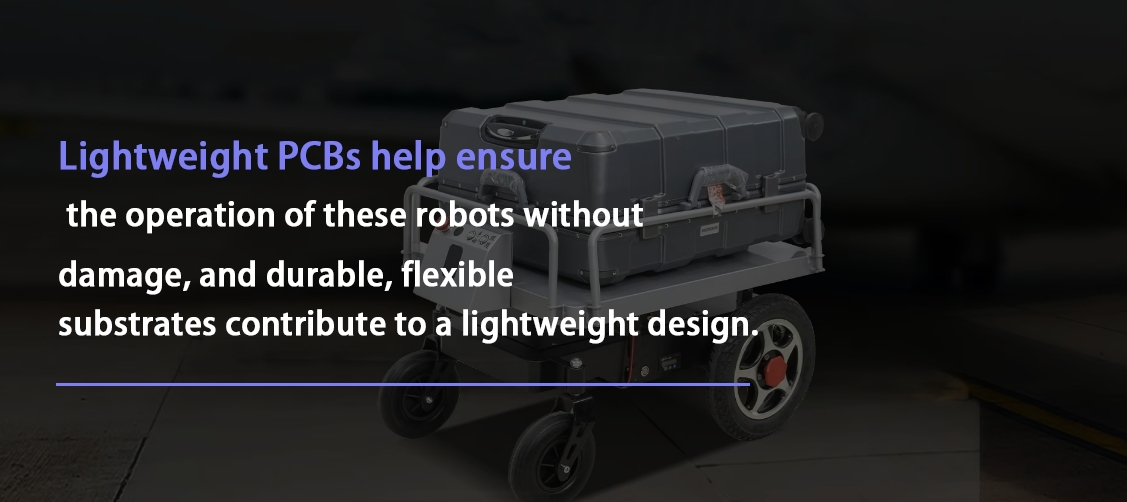
Medical robots address several limitations of human workers. They cannot be infected while working with sick patients or handling pathogens. Additionally, robots can swiftly deliver medications and supplies to doctors and patients. In surgeries, remote surgeons can control robots, which also assist in various surgical procedures. Lightweight PCBs ensure the robots' operation without damage, and durable, flexible substrates contribute to their lightweight design.
Manufacturing
Robots can handle repetitive manufacturing tasks previously performed by humans. They do not need shift changes or breaks, enabling continuous production around the clock, every day of the year. Reliability is crucial for the consistent operation of these automated systems. Metal PCB substrates are ideal for long-term use, while flexible substrates offer the necessary flexibility and durability.
Energy
High-performance rigid PCBs engineered to withstand extreme operational demands are critical for energy infrastructure applications—from refinery controls to offshore installations—where built-in moisture resistance and thermal stability ensure consistent performance of industrial automation systems under sustained hostile conditions
Marine
Subsea robotics platforms deployed for deep-sea exploration require mission-critical PCB architectures capable of withstanding abyssal pressure differentials and thermal extremes. These marine-grade circuit boards integrate failsafe operation protocols for vital systems ranging from hydrodynamic navigation arrays to pressure-tolerant laser communications—all engineered for resilience in inaccessible environments where maintenance-free reliability and defect-free construction are non-negotiable prerequisites
Specifications for Robot Circuit Boards and Our Capabilities
KLS delivers cross-industry robotic PCB solutions through specialized expertise in mission-critical fabrication—engineered with precision-tolerance manufacturing and industry-specific qualification protocols to address the operational demands of next-generation automation systems
KLS provides agile PCB engineering solutions featuring:
-
24-hour rapid prototyping with IPC-6012 certified fabrication
-
Multilayer configurations scaling to 32-layer HDI designs
-
Application-specific surface finishes (ENIG/HASL/immersion silver)
-
Advanced substrate architectures (FR4/polyimide rigid-flex hybrids)
-
Material science consultation covering high-Tg/rogers laminates

Contact KLS for PCBs suitable for various robotic applications.
To ensure your circuit board meets the unique demands of your robotics projects, it's essential to work with a professional in the PCB field who can create custom solutions tailored to your specifications. Our services include rapid turnaround times and diverse surface finishes, allowing us to meet your specific needs. For high-quality printed circuit boards, please contact KLS.


(2Products)