
2025-05-27
What Is PCBA Production Process?
Analysis of PCBA production process
The PCBA (Printed Circuit Board Assembly) production process is a systematic project, aiming to integrate electronic components into PCB substrates with the help of welding or mounting processes. Its core links cover four stages: SMT patch processing, DIP plug-in processing, PCBA testing, and finished product assembly. The following is an explanation of the specific process and key processes:
1. SMT patch processing

1. Solder paste printing
- Remove the solder paste from the refrigerator and thaw it and stir evenly. Print the solder paste on the PCB pad through the steel mesh to prepare for subsequent component mounting.
- SPI detection: Use solder paste thickness detector (SPI) to check the printing quality of solder paste to ensure that the solder paste amount meets the standards.
- SPI detection: Use solder paste thickness detector (SPI) to check the printing quality of solder paste to ensure that the solder paste amount meets the standards.
2. Component mounting
- Place the patch components in Feida (feeder), and the patch machine accurately attaches the components to the PCB pad with visual recognition.
3. Reflow soldering
- The PCB board passes through a reflow soldering furnace, the solder paste is heat-melted and cooled to achieve welding of components and PCB.
4. AOI detection and remediation
- Through automatic optical detection (AOI) scanning welding effect, defects such as solder joint offset and missing patch will be repaired after being found.
2. DIP plug-in processing

1. Plug-in and wave soldering
- Insert plug-in components (such as resistors, capacitors, etc.) into the PCB hole position, and use the wave solder to spray liquid tin to complete the soldering.
2. Post-processing
- Cut the foot: trim the pins too long;
- Washing plate: Use washing plate water or machine to clean welding residues;
- Quality inspection: Check the welding quality through manual or equipment to re-repair the unqualified products.
- Washing plate: Use washing plate water or machine to clean welding residues;
- Quality inspection: Check the welding quality through manual or equipment to re-repair the unqualified products.
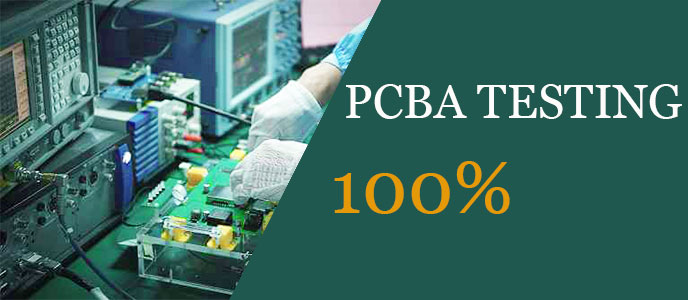
3. PCBA test
1. ICT test
- Use the online tester (ICT) to detect circuit on and off, short circuit and false welding problems to ensure that the electrical performance meets the standards.
2. FCT function test
- Simulate the actual operating environment and test the functional parameters of PCBA (such as input/output signals, logic responses).
3. Aging and vibration test
- Verify the stability of the product under extreme conditions through high-temperature aging and vibration tests.
4. Finished product assembly
1. Case assembly
- Assemble the tested PCBA board with mechanical structures such as shells and heat sinks to form a complete product.
2. Final testing and shipment
- After assembly, the whole machine function test will be carried out, and the qualified products will be packaged and shipped.
Key process characteristics
- Automation and detection: AOI, SPI and other equipment ensure high-precision welding and reduce manual errors.
- Hybrid process compatibility: supports mixed assembly of SMT and DIP, suitable for multi-layer designs of complex electronic products.
- Quality control: IPQC (process quality control) and QA (final quality inspection) throughout the entire process ensure product yield.
- Hybrid process compatibility: supports mixed assembly of SMT and DIP, suitable for multi-layer designs of complex electronic products.
- Quality control: IPQC (process quality control) and QA (final quality inspection) throughout the entire process ensure product yield.
Contact us. Learn more about PCBA products and manufacturing information