
2021-10-29
The future development direction of PCB technology
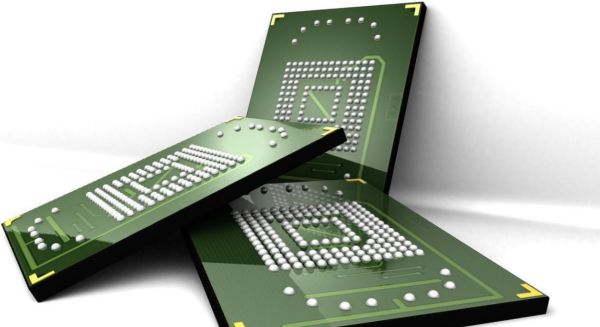
1. Chip-scale packaging CSP will gradually replace TSOP and ordinary BGA
CSP is a chip-scale package. It is not a separate form of package, but a chip-scale package called when the chip area is comparable to the package area. CSP package allows the ratio of chip area to package area to exceed 1:1.14, which is quite close to the ideal situation of 1:1, which is about 1/3 of the ordinary BGA; the center pin form of the CSP package chip effectively shortens the signal The conduction distance reduces the attenuation, and the anti-interference and anti-noise performance of the chip can also be greatly improved.
In the CSP packaging method, the chip particles are soldered on the PCB board by solder balls. The contact area is large, so the heat generated by the chip in operation can be easily conducted to the PCB board and dissipated.
Development prospects: Chip-scale packaging developed in response to the light, thin, short, and small electronic products is a new generation of packaging methods. According to the development trend of electronic products, chip-scale packaging will continue to develop rapidly and gradually replace TSOP (ThinSmallOutlinePackage) packaging And ordinary BGA package.
2. The output value of photovoltaic panels increased by 14% annually
The photoelectric board is the photoelectric backplane, which is a special printed circuit board with built-in light path, and it is also a kind of backplane, which is mainly used in the communication field. The main advantages of optical backplanes: low signal distortion; avoid noise; very low crosstalk; loss is independent of frequency; dense wavelength multiplexing technology; 12-6 channel multi-channel connector; waveguide multi-channel connector; improved discrete cable Reliability; the number of optoelectronic boards can reach 20 layers, more than 20,000 lines, and 1000 pins of connectors; the traditional backplane adopts copper wires, and its bandwidth is limited to a certain extent.
Development prospects: Due to the increase in bandwidth and distance, copper transmission lines will reach the limits of bandwidth and distance, and photoelectric transmission can meet the needs of increased bandwidth and distance. The photoelectric backplane is mainly used for communication exchange and data exchange, and future development will be applied to workstations and servers. Gen predicts that the global output value of optoelectronic backplanes will reach 200 million U.S. dollars, an annual increase of about 14%.
CSP is a chip-scale package. It is not a separate form of package, but a chip-scale package called when the chip area is comparable to the package area. CSP package allows the ratio of chip area to package area to exceed 1:1.14, which is quite close to the ideal situation of 1:1, which is about 1/3 of the ordinary BGA; the center pin form of the CSP package chip effectively shortens the signal The conduction distance reduces the attenuation, and the anti-interference and anti-noise performance of the chip can also be greatly improved.
In the CSP packaging method, the chip particles are soldered on the PCB board by solder balls. The contact area is large, so the heat generated by the chip in operation can be easily conducted to the PCB board and dissipated.
Development prospects: Chip-scale packaging developed in response to the light, thin, short, and small electronic products is a new generation of packaging methods. According to the development trend of electronic products, chip-scale packaging will continue to develop rapidly and gradually replace TSOP (ThinSmallOutlinePackage) packaging And ordinary BGA package.
2. The output value of photovoltaic panels increased by 14% annually
The photoelectric board is the photoelectric backplane, which is a special printed circuit board with built-in light path, and it is also a kind of backplane, which is mainly used in the communication field. The main advantages of optical backplanes: low signal distortion; avoid noise; very low crosstalk; loss is independent of frequency; dense wavelength multiplexing technology; 12-6 channel multi-channel connector; waveguide multi-channel connector; improved discrete cable Reliability; the number of optoelectronic boards can reach 20 layers, more than 20,000 lines, and 1000 pins of connectors; the traditional backplane adopts copper wires, and its bandwidth is limited to a certain extent.
Development prospects: Due to the increase in bandwidth and distance, copper transmission lines will reach the limits of bandwidth and distance, and photoelectric transmission can meet the needs of increased bandwidth and distance. The photoelectric backplane is mainly used for communication exchange and data exchange, and future development will be applied to workstations and servers. Gen predicts that the global output value of optoelectronic backplanes will reach 200 million U.S. dollars, an annual increase of about 14%.

3、The development prospects of rigid-flex board are very promising
Flexible board FPC used to be called chaotically. It was first called soft board, and later it was also called flexible board, flexible printed circuit board and so on. Rigid-flex printed board refers to a printed board that contains one or more rigid areas and one or more flexible areas, which is composed of rigid boards and flexible boards laminated together in an orderly manner, and formed by metalized holes Electrical connections. Rigid-flex printed boards can not only provide the necessary support for rigid printed boards, but also have the flexibility of flexible boards to meet the requirements of three-dimensional assembly.
In recent years, the demand has increased.The traditional rigid-flex board design concept is to save space, facilitate assembly and improve reliability; a new type of rigid-flex board that combines traditional rigid-flex board design and micro-blind via technology provides a new solution for the interconnection field.
Its advantages are: suitable for folding mechanisms, such as foldable mobile phones, cameras, and laptops; improve product reliability; use traditional assembly methods, but can simplify assembly and be suitable for 3D assembly; combine with micro-via technology to provide better Design convenience and use of smaller components; use lighter materials instead of traditional FR-4. Rigid-flex boards used in mobile phones are generally formed by connecting two layers of flexible boards and rigid boards.
Development prospects: Rigid-flex board is a type of PCB that has grown very rapidly in recent years. It is widely used in computers, aerospace, military electronic equipment, mobile phones, digital cameras, communication equipment, analytical instruments, etc.

4、 The HDI board will grow rapidly in the future
HDI is the abbreviation of HighDensityInterconnect. It is a kind of (technology) for the production of printed boards. It is currently widely used in mobile phones, wearable devices, smart furniture, autonomous driving, etc., generally using the build-up method (Build-up) manufacturing, the number of layers The more, the higher the technical grade of the panel.
Ordinary HDI boards are basically one-time build-up. High-end HDI uses two or more build-up techniques, while using advanced PCB technologies such as stacking holes, electroplating and filling holes, and laser direct drilling. High-end HDI boards are mainly used in 5G mobile phones, advanced digital cameras, IC carrier boards, etc.
Development prospects: According to the use of high-end HDI boards-5G boards or IC carrier boards, its future growth is very rapid.