
Understanding PCB Shelf Life: A Manufacturer’s Guide to PCBA Reliability
1.Why Do PCBs Have an Expiration Date?
- Hygroscopicity (Moisture): The epoxy resin and glass fiber in PCB substrates naturally absorb humidity. During high-temperature reflow soldering, trapped moisture turns into steam, causing "popcorning" or internal layer separation.
- Surface Oxidation: The protective finish on pads (Gold, Tin, or Silver) eventually reacts with ambient oxygen and sulfur, creating a non-conductive layer that prevents perfect soldering.
- Intermetallic Growth: Over time, the chemical bond between the copper and the surface finish can grow too thick, making the solder joints brittle.
2.PCB Shelf Life Comparison Table
To help you manage your inventory, here is the reliability window for the most common surface finishes under vacuum-sealed, climate-controlled conditions:
| Surface Finish | Recommended Shelf Life | Sensitivity | Required Action if Expired |
| ENIG (Immersion Gold) | 12 Months | Low | Bake at 120 ±5℃ for 1-4 hours |
| HASL (Solder Leveling) | 12 Months | Moderate | Bake at 120 ±5℃ for 1-4 hours |
| OSP (Organic Film) | 6 Months | High | Do NOT bake; test solderability; or Re-coat |
| Immersion Silver/Tin | 3-6 Months | Extreme | Inspect for tarnishing; bake or scrap |
3.Expert Protocol: How KLS Handles "Out-of-Date" Boards
If your project utilizes boards that are nearing or have slightly exceeded their shelf life, our engineering team follows a strict ISO-compliant protocol:
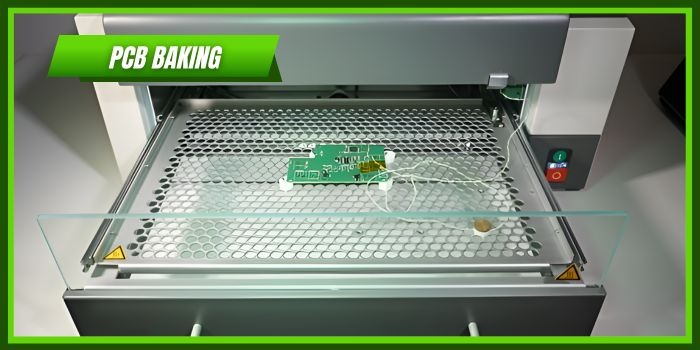
- Baking Standards: Except for OSP, expired boards must be baked to remove moisture. For ENIG/HASL, we bake at 120 ℃ for 1 to 4 hours.
- The 5-Day Rule: Once a PCB is baked, it must be used within 5 days (120 hours). Beyond this window, the pads may suffer from secondary oxidation.
- Solderability Testing: For OSP or silver finishes, we perform a "Wetness Test." If the solder does not flow perfectly, the board is discarded to protect the final product's quality.
4.Why Reliability Matters for In high-precision fields
At KLS, we specialize in complex 1-32 layer PCBA projects. We ensure that every board used in our Shenzhen factory is:
- Stored in vacuum-sealed, humidity-controlled environments.
- Tracked via a strict FIFO (First-In, First-Out) system.
- Subjected to 100% AOI (Automated Optical Inspection) and Functional Testing.
FAQ: People Also Ask
Q: Can I still use a PCB if the vacuum seal is broken?
A: If the seal is broken for more than 48 hours in a humid environment, we recommend baking the board before assembly to prevent delamination.
Q: Is it safe to use PCBs that are over 12 months old?
A: For consumer electronics, it may be possible after a successful solderability test. However, for Medical, Aerospace, or Automotive sectors, using PCBs over 12 months old is strictly prohibited by industry safety standards.